One of the emotionally complicating factors of constantly living in and travelling through countries with troubled pasts is that you will inevitably end up having many conversations with and interacting with people who had lived through that troubled past.
And given that troubled pasts often involved death, betrayal, torture, imprisonment and whatnot, it’s a disconcerting feeling wondering which side the guy selling you a beer was on. Or whether your student had any immediate family members or friends tortured and imprisoned (which happened in Turkey a few times, including once with a middle-aged business student casually mentioning that his father’s three best friends were executed for being communists after the military coup thirty years ago). Or whether the sweet middle aged Chinese dorm mother you work with daily ever betrayed her parents as a Red Guard, or if she had been pulled out of school to farm millet for her teen years, or if her family had starved to death during the famines after the Great Leap Forward.
(Side note: I’ll probably get myself on the Great Firewall’s bad list for this one. Too many key words. Damn.)
In Cambodia, I kind of knew which side most of the people were on, since the Khmer Rouge pretty much destroyed the country and its people quite thoroughly before finally being run out of town. So I started wondering about all the kind, smiling people we met: the tuktuk drivers, the waitstaff, the guides, the construction workers, the hotel staff, the armless and legless land-mined book sellers on the streets, the children running after you keening out a phoenetic approximation of monnaieeeeeee monnnnaiiiieee.
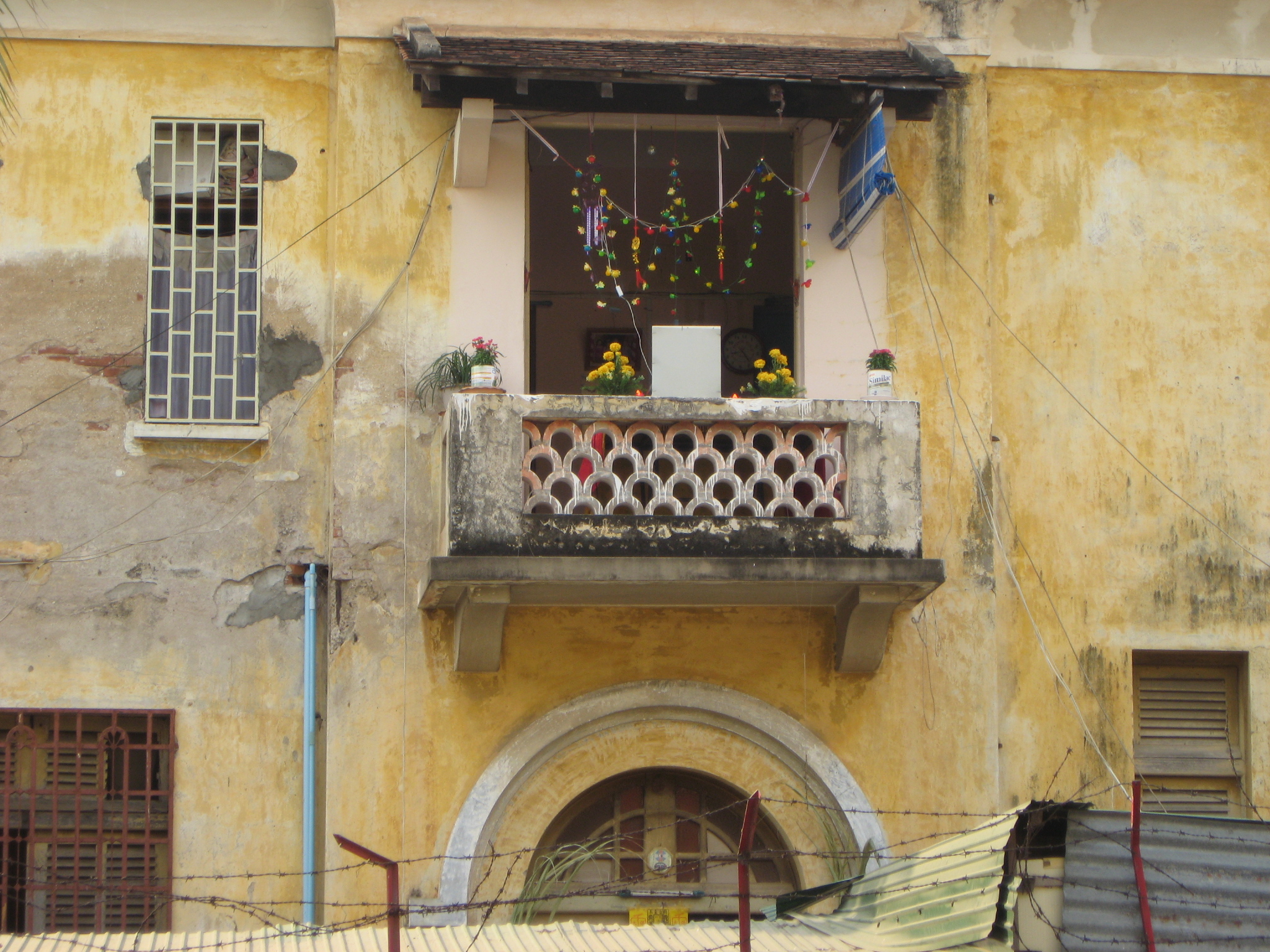
I’m making these photos big, by the way, so they can be seen clearly and immediately. They will be wider than the parameters my theme gives me. This is intentional. I don’t want small pictures here.
You know that everyone had been screwed over, whether directly or indirectly. It has been pretty hard to be Cambodian in the past 50 years and have not had a rather rough time (to put it mildly). I read somewhere that Post Traumatic Stress Disorder levels ranged from 50% to 80%, depending on how it was defined. The genocide took place between 1975 and 1979. I’m 36. I was born in 1974.
If I had been born Cambodian, my family and I would have definitely been murdered: we are full of teachers and educated folk, city dwellers mostly. As a baby, it would not have been inconceivable that I would have been murdered alongside my mother. In the museum, I saw a portrait of a young mother holding her baby before being tortured and murdered. Both of them. The baby was tortured and murdered too. It was their mug shot. The Khmer Rouge were very meticulous in their documentation: mug shots just after arrest, shots after torture, shots upon death.